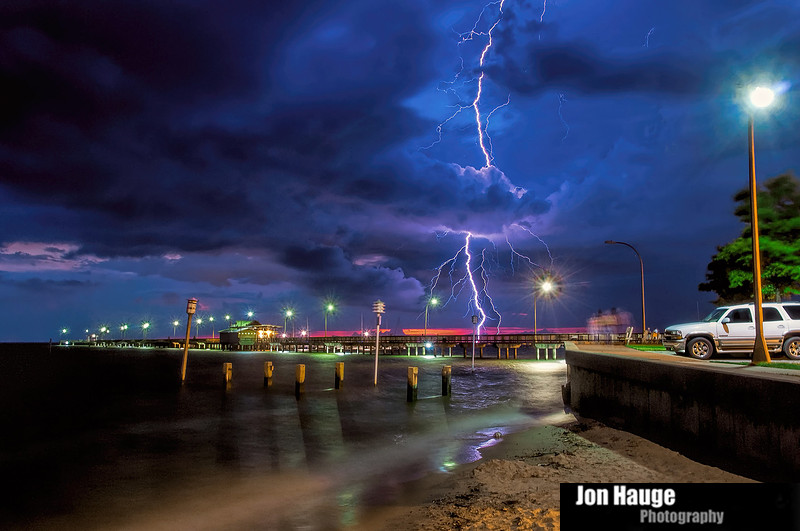
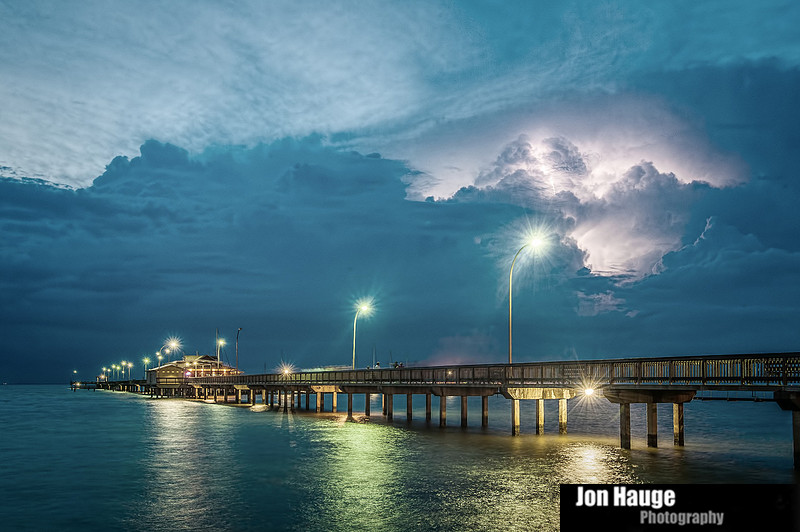
Fairhope Pier|Lightning Strikes Twice
These images were taken a couple of years apart at the Fairhope Municipal Pier during a thunderstorm. It's pretty easy catching lightning on camera at night. You set a long shutter speed and have something sturdy to brace the camera. You can use a tripod, park bench or just put the camera on the ground. If I put the camera down low I will find a stick, or rock or even fold the camera strap up and place under the camera to get the lens pointed slightly up.
There isn't a formula for how long to set the shutter speed. It depends on the lighting conditions and what aperture you set. If you get in Shutter mode, just set a long time, like 5 seconds and see what happens. That's the beauty of digital, instant feedback. If you are shooting a scene around water and want the glassy look, get a really long exposure, something in the 10 to 30 second range. Since you are in "S"hutter mode, the camera will make the decision about your aperture. Note: For good feedback, put your LCD playback display into "highlight" mode if it has one. This mode will show "blinkies", areas that are overexposed will blink. The only areas you want blinking in the LCD are from light sources. If you have a bunch of blinking areas, increase your shutter speed. When shooting just after sunset, the light will be constantly changing. You have to keep adjusting to get the balance of perfect exposure.
If you want the starburst effect around the lights, you need to use an aperture in the f16 range. You will need to switch camera modes and play around with your aperture settings until you get the starburst effect. Note:how many blades you see bursting out depends on the physical characteristics of the lens you use.
Now that you are having fun setting in the S and A modes of your camera, you can see how each setting determines the other. If you feel adventurous get in full manual mode and play around with both settings at the same time!
Since we are dealing with long exposure, set your ISO to the lowest base of your particular camera.
The Luck Factor Since you are keeping the camera stationary, luck does play a huge part in capturing lightning, but you can increase your odds. You have to watch where most of the lightning takes place. For these pictures I noticed most of the activity was a bit North of the pier. I wanted to get a shot with lightning over the pier so I got on the South side of the pier. The pier was between me and the lightning cloud.
I set up my camera, went through the settings as described above and then just clicked away. I acquired focus on the pier like I normally would for just shooting a pier photograph. You may have to take a hundred pictures to get one really good strike or it could happen on your first try. It's like fishing for lightning. You are not trying to time your picture with the lightning strike. What you are doing is hoping the lightning strikes while the camera shutter is open. This is why you use a long shutter speed.
If you want more technical explanations and tips google "long exposure photography"
P.S. Be safe. If you see lightning and then hear thunder immediately after, get cover.
Keywords:
baldwin county photographer,
eastern shore photographer,
fairhope photographer,
fairhope photography,
fairhope pier,
gulf shores photographer,
lightning photography
Comments
No comments posted.
Loading...
|