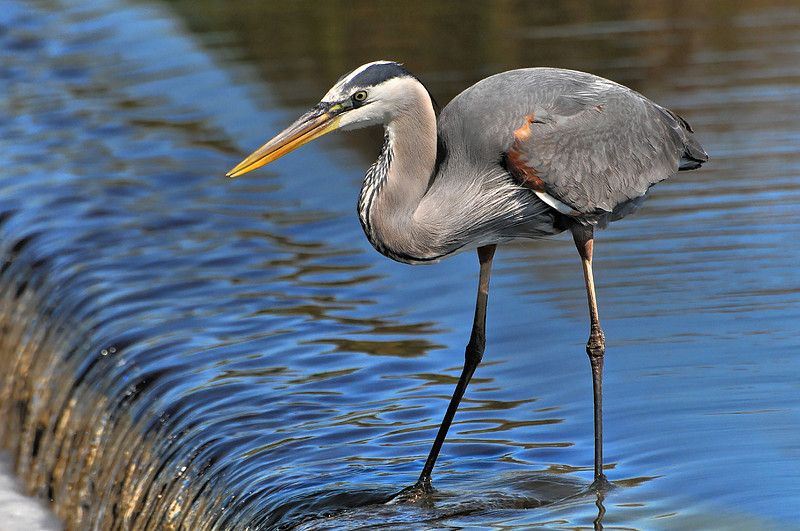
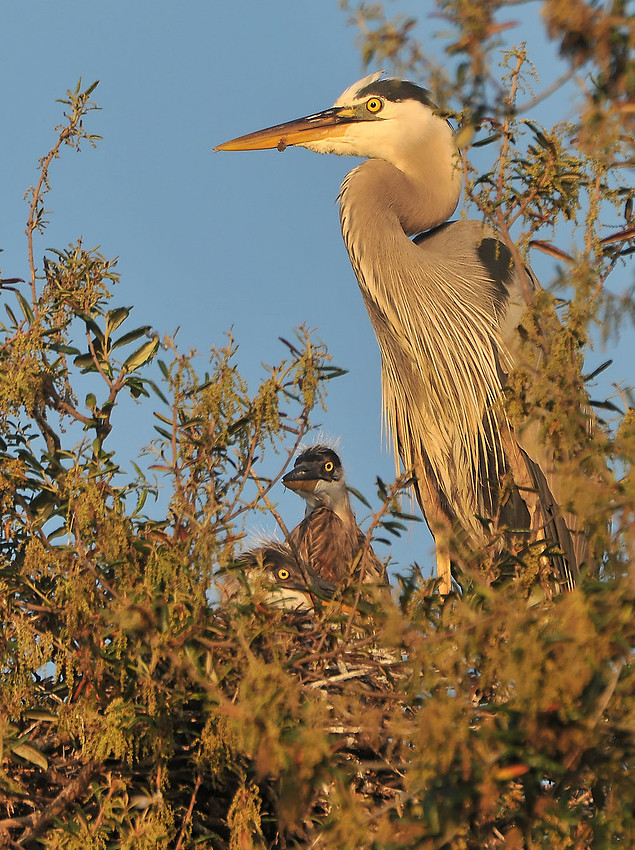
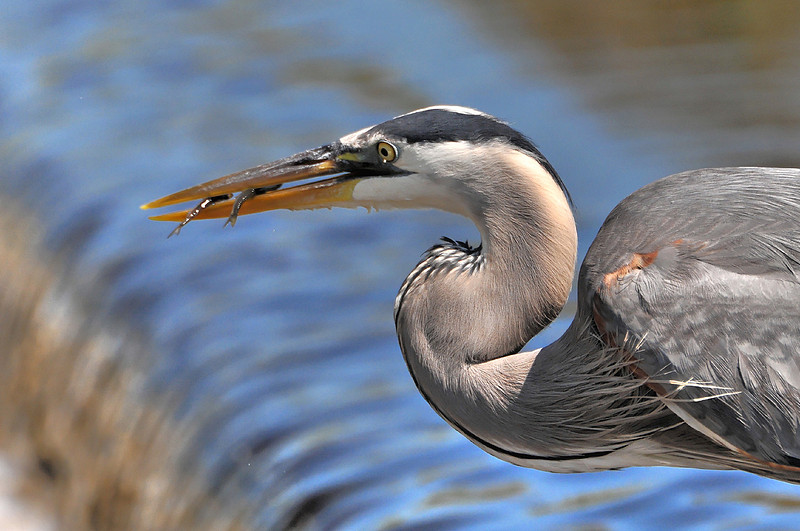
Herons, Egrets, and Ibises of The Gulf CoastHerons and egrets are found throughout the North American Gulf Coast. The following are some of the common and not so common birds that can be seen while at the beach, bays, rivers, and open fields in the area. Where possible the juvenile variant is included for a comparison. Also included are some of the feeding behaviors of the various birds. Great Blue Heron The great blue heron is the biggest heron on the Gulf Coast. They are sometimes misidentified as cranes. They are a common sight along the beaches of the Gulf Coast, especially around fishing piers where they hope to snag trash fish anglers may throw their way. A great blue heron looking for fish in the Gulf State Park, Gulf Shores-Alabama A nesting great blue heron in Orange Beach,Alabama A great blue heron catches two fish at the weir in the Gulf State Park
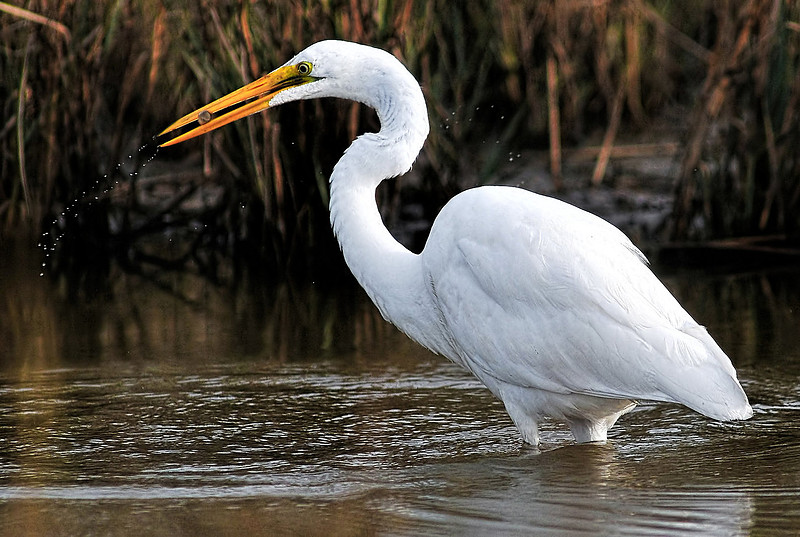
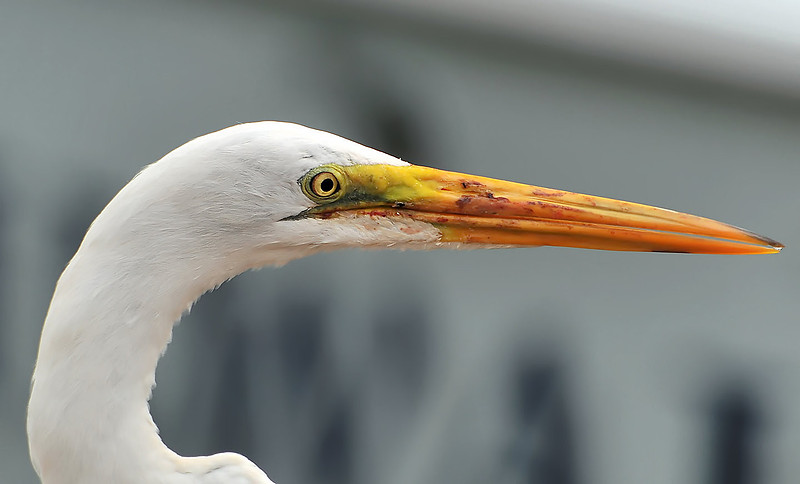
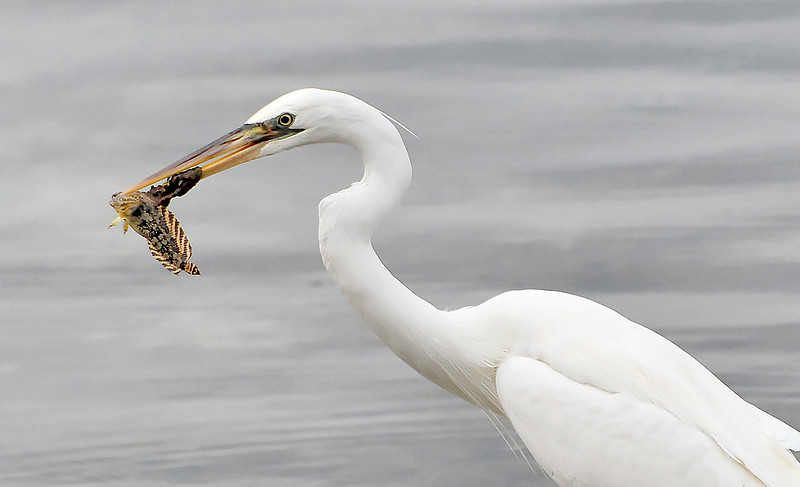
Great Egret The great egret is another large heron, although it is slightly smaller than the great blue heron. The major difference from the great blue heron is the white plumage of the great egret. A great egret catches a fish in Ocean Springs, Mississippi Like the great blue heron, it wades in the water and then uses its long bill to nab fish swimming by.
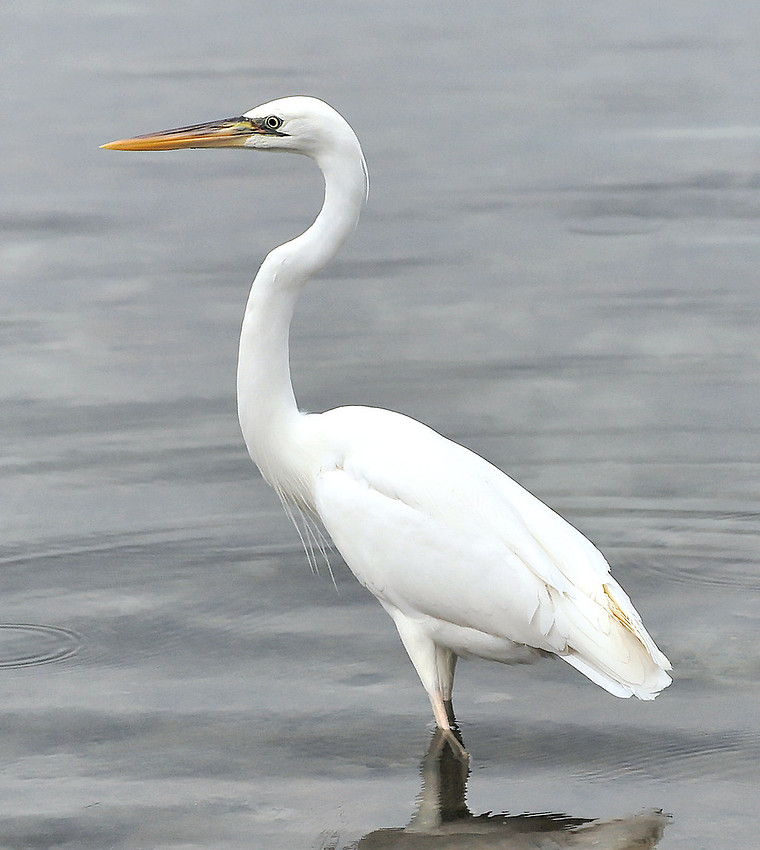
Great White Heron You may be wondering why the great egret doesn't have the title of the great white heron. The answer is because it isn't the largest white heron in North America. Found only in South Florida, there is a white morph of the great blue heron. Notice the difference of the beak. The great white heron has the same beak coloring of the GBH, not the almost total yellow of the great egret. There is some controversy as how they should be classified. http://blog.audubonguides.com/2011/04/11/wading-into-controversy-the-great-white-heron/ A great white heron catches fish in the Florida Keys
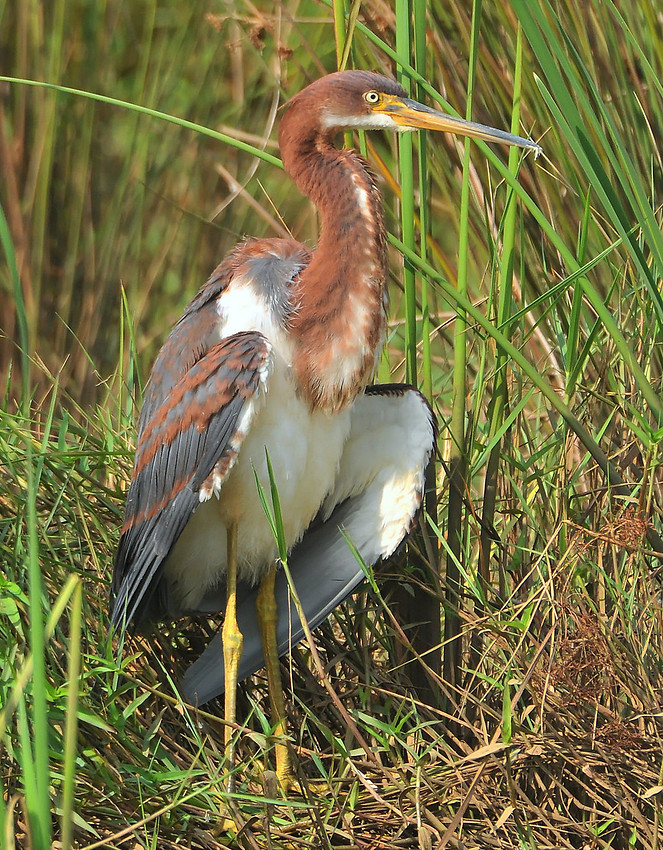
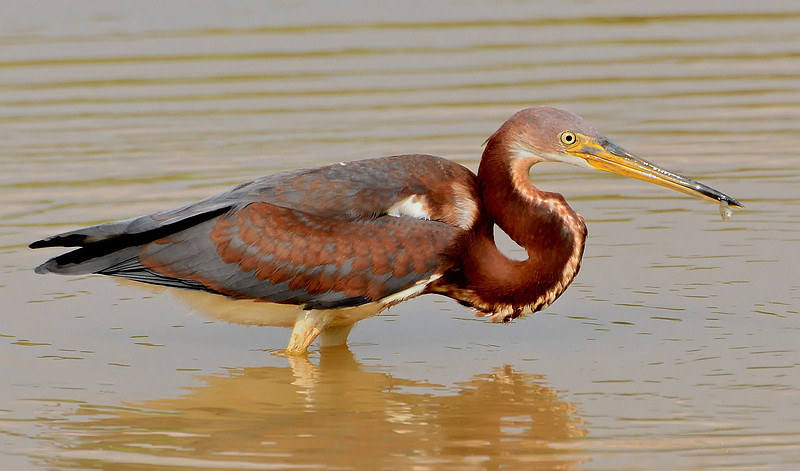
Tricolored Heron The tricolored heron is a marsh bird that can be found around ponds, lakes and ditches. It is a large heron although smaller than the great blue heron and great egret. As the name suggests, it displays a variety of colors in its plumage. A tricolored heron feeds in a water ditch on the outskirts of Robertsdale,Alabama
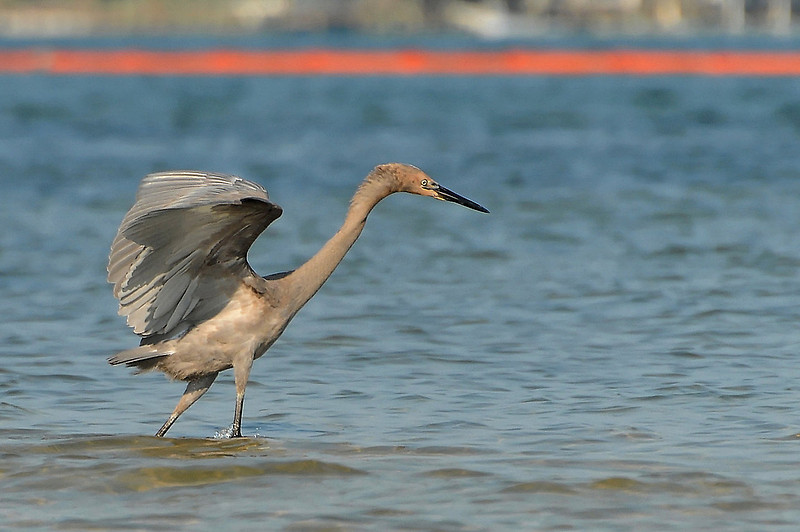
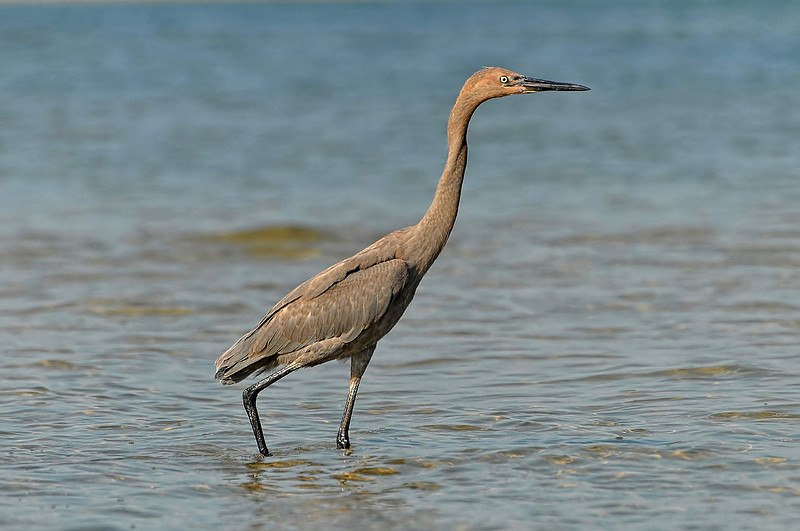
Reddish Egret When feeding, reddish egrets look like they are dancing for their fish. They will prance and flap their wings much more than the stealthier great blue heron. A reddish egret looks for bait fish in Orange Beach. The orange line in the background is oil boom put out in Perdido Pass due to the 2010 BP oil spill.
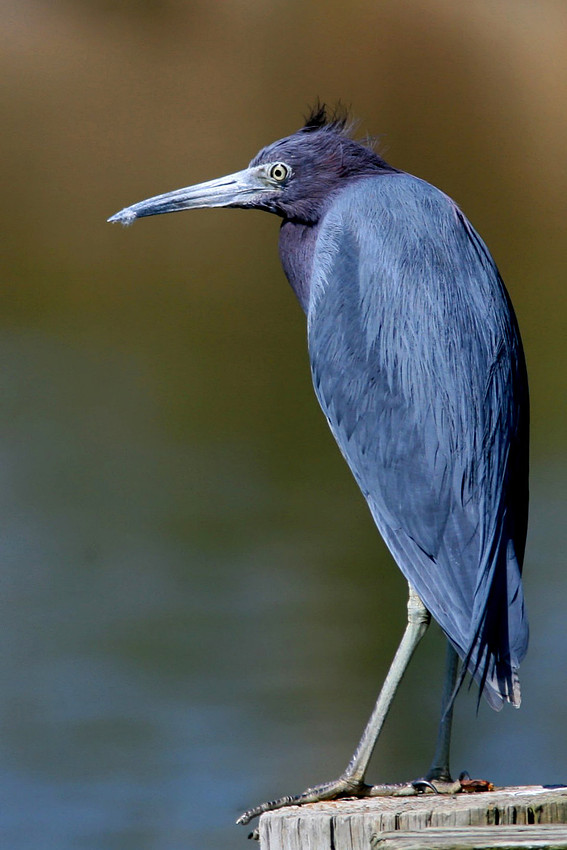
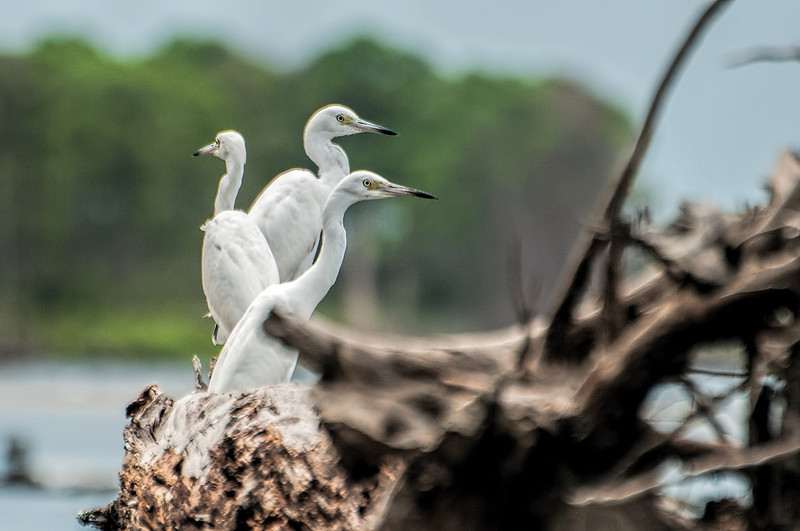
Little Blue Heron There is a dramatic difference in appearance between the adult and juvenile little blue heron. The adult is blue to grey while the first year juvenile features a white plumage similar in look to the snow egret. And adult little blue heron in Pascagoula, Mississippi
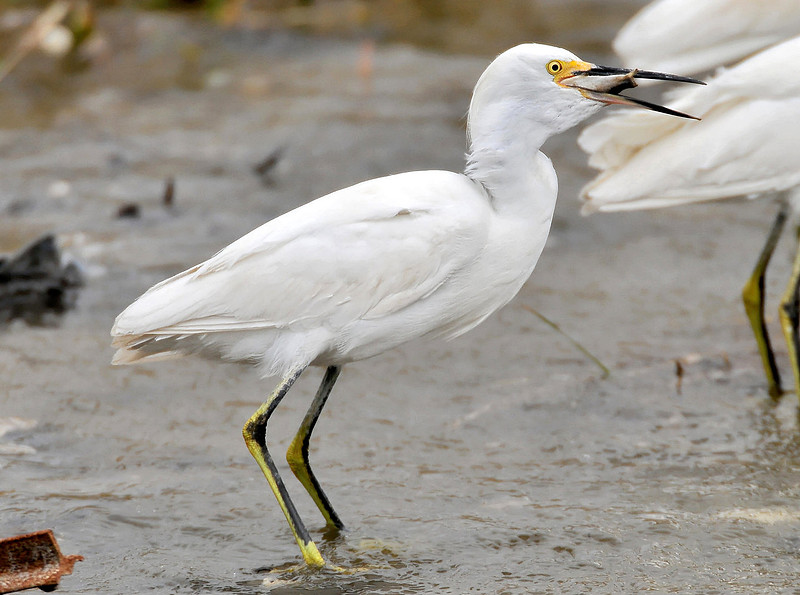
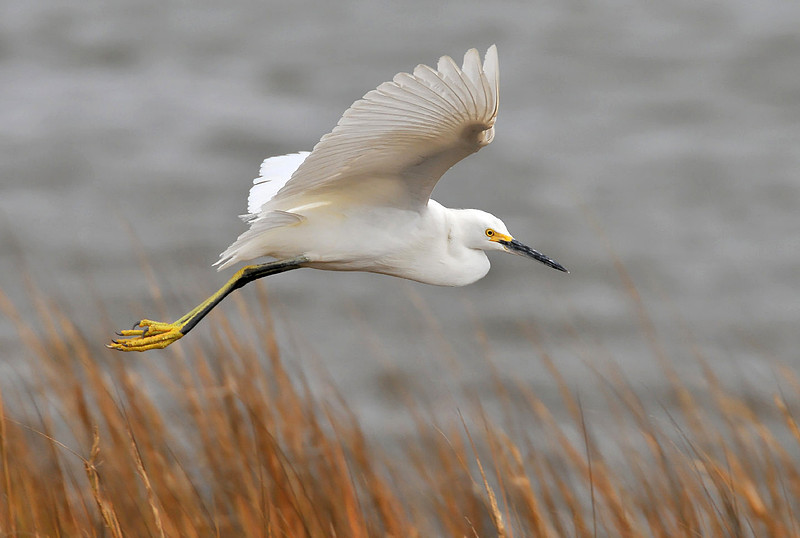
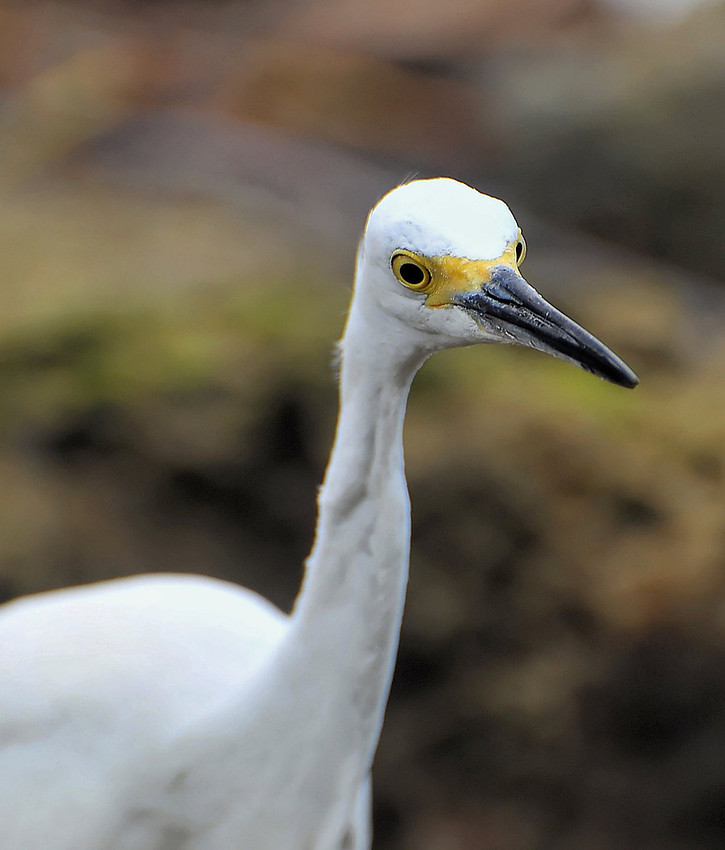
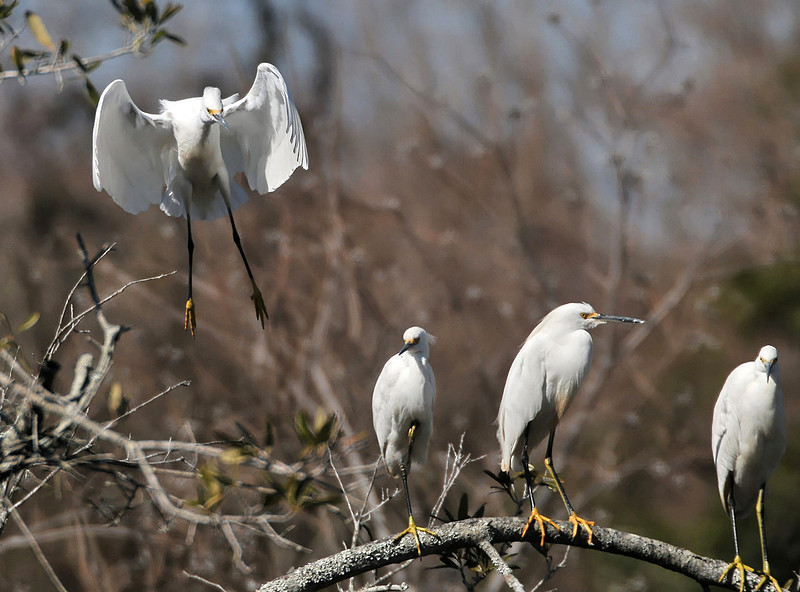
Snowy Egret The snowy egret is a small heron that was hunted to the brink of extinction because its elegant plumes were sought after in the fashion industry. Because of conservation efforts their numbers have increased dramatically. A snowy egrets downs a fish in Pascagoula, Mississippi
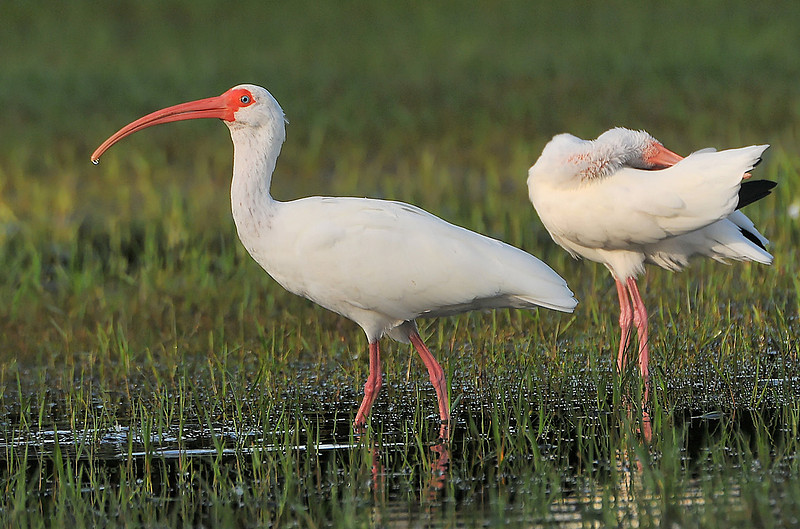
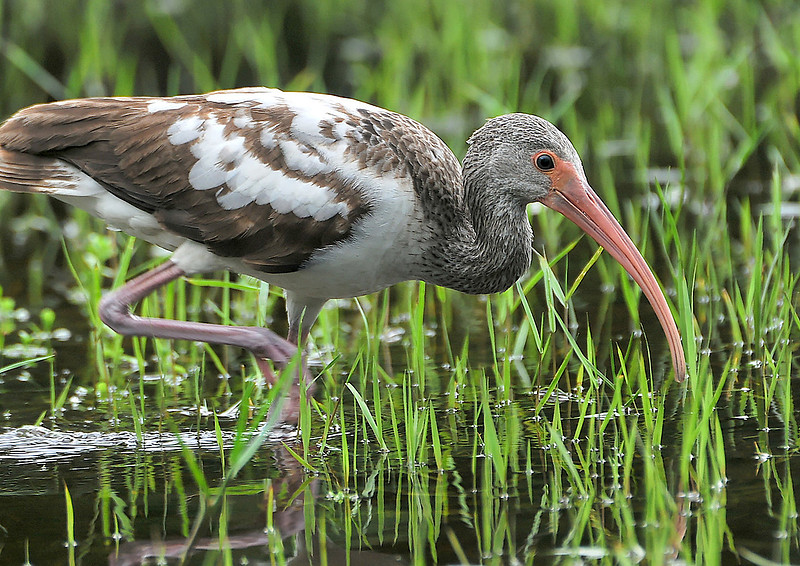
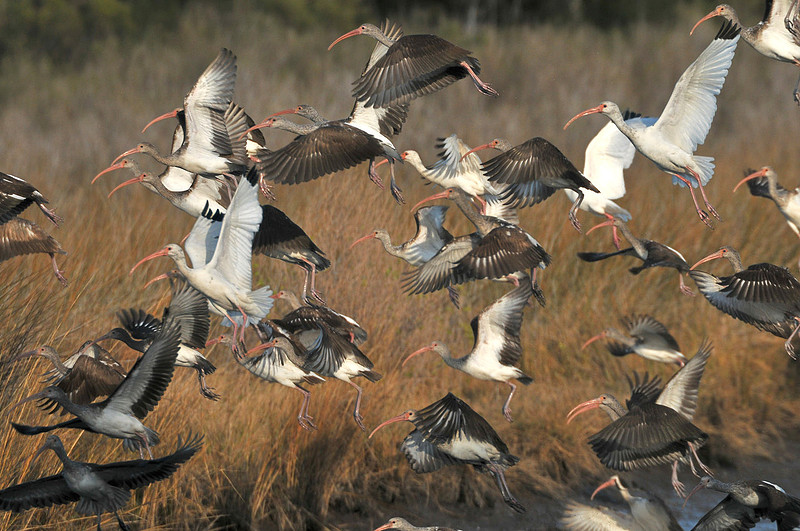
More Photographs of Snowy Egrets White Ibis Similar in size to the snowy egret, the one major difference is the long curved bill of the white ibis. The juvenile ibis features darker colors. Adult white ibis wade in a catch pool after a rain.
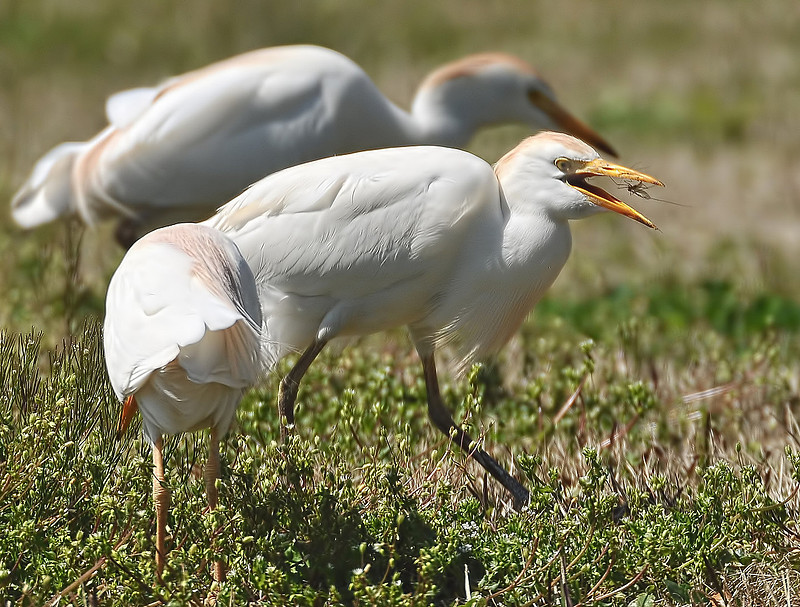
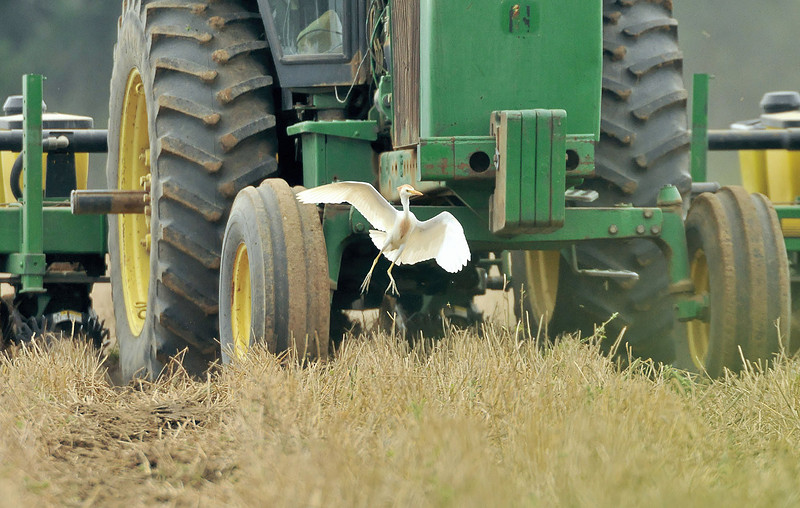
Cattle Egrets Cattle egrets are similar in size to the snowy egret. There are two distinguishing characteristics of the snowy egret: Yellow bills and they are seen inland. Cattle egrets got their name because they are a common sight among cattle and other large animals. They will follow cattle and even tractors as they stir up insects and small rodents. Cattle egrets in Pascagoula, Mississippi
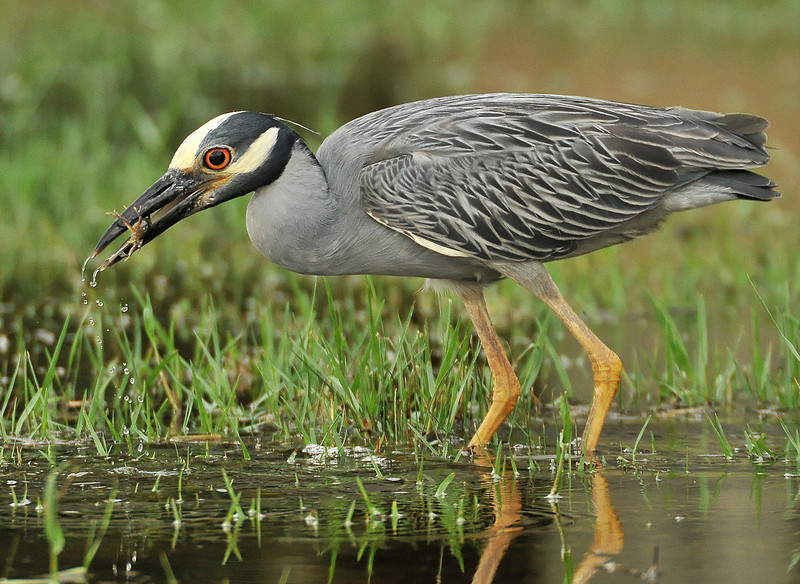
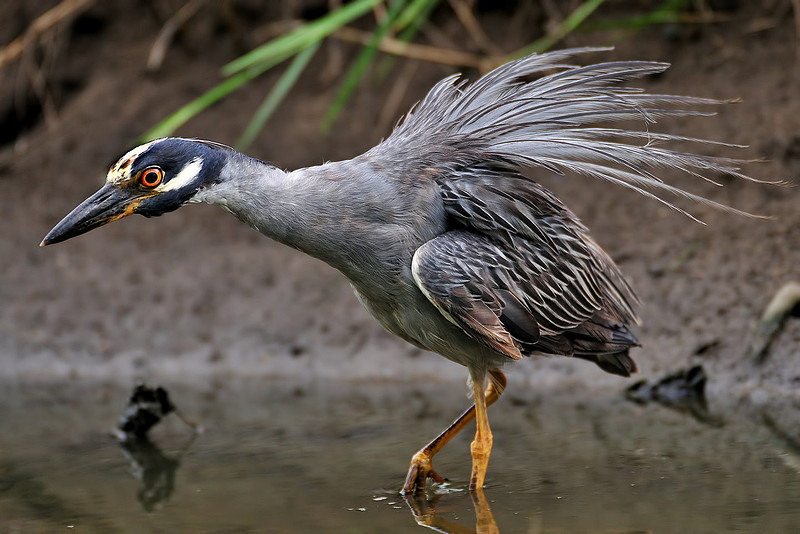
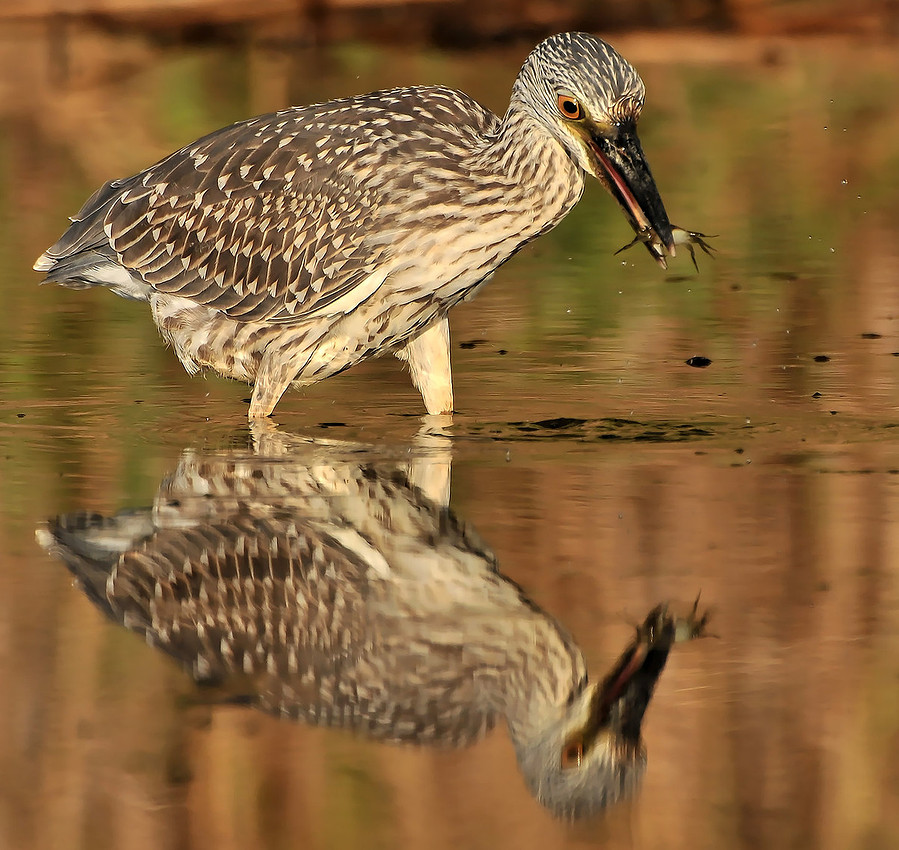
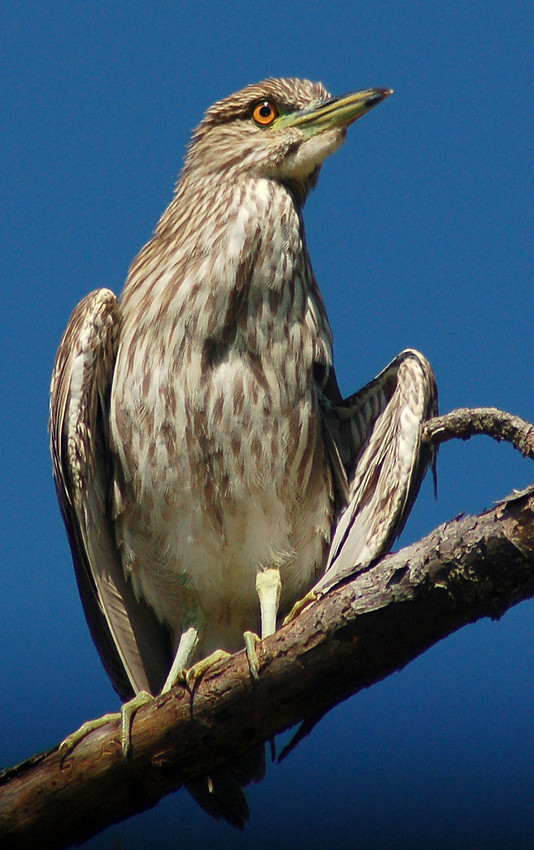
Yellow-Crowned Night Heron Yellow-crowned night herons can be seen stalking crabs and crawfish along ditches, lakes and bays along the Gulf Coast. An adult yellow-crowned night heron in Pascagoula
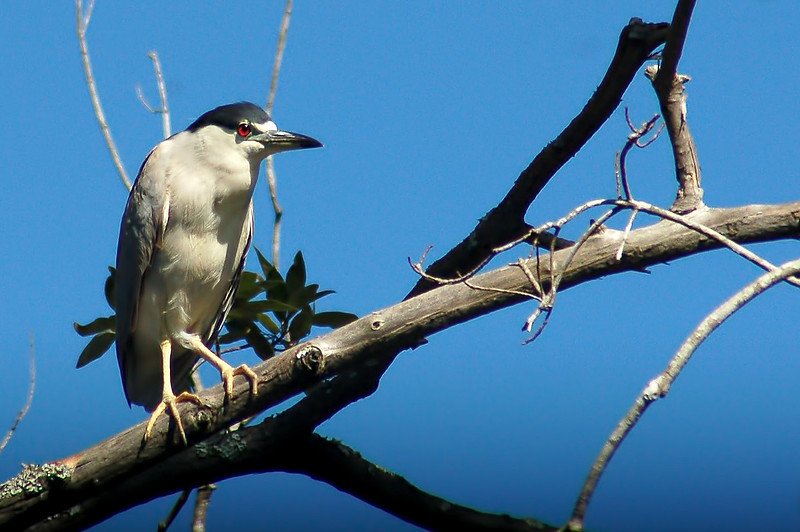
Black-Crowned Night Heron Black-crowned night herons are similar in size to the yellow crowned herons, but they have a darker forehead. They are most active at night. An adult black-crowned night heron in Fish River
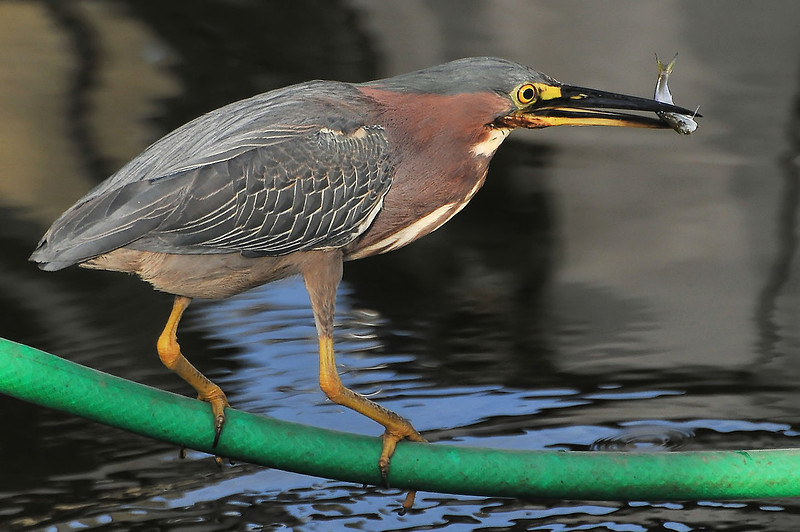
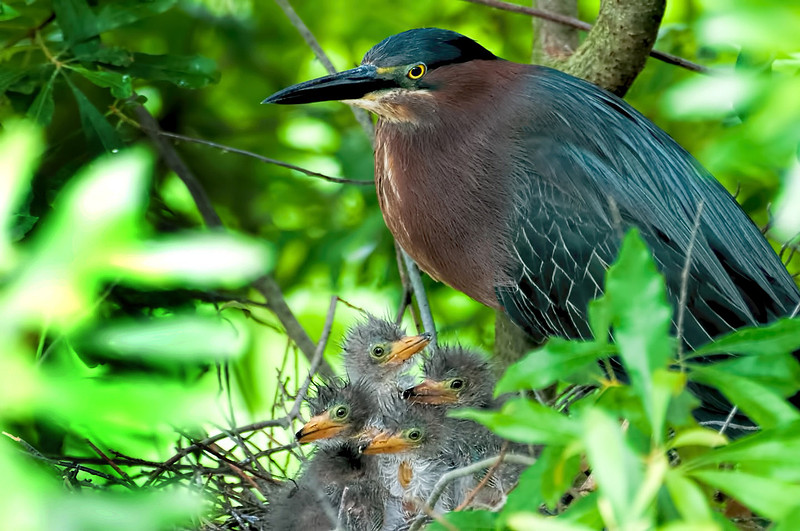
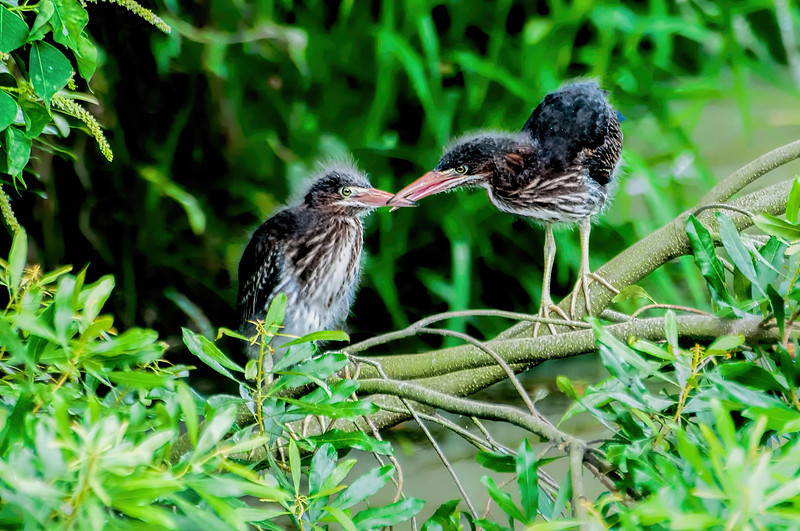
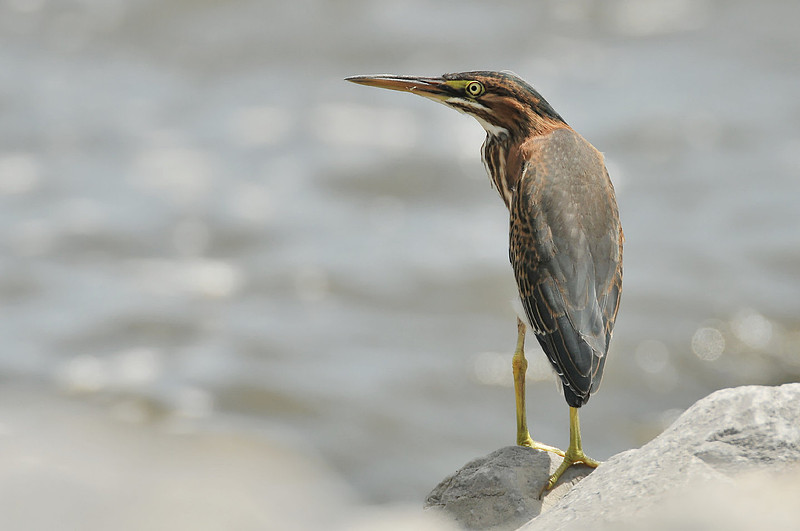
Green Heron Green herons do wade in the water like other herons for fish. However they will typically perch above the water and wait for fish to swim under. A green heron catches a fish in the Ocean Springs Harbor
American Bittern The American Bittern can be found in bogs, marshland, and estuaries along the Gulf Coast An American bittern in Ocean Springs, Mississippi
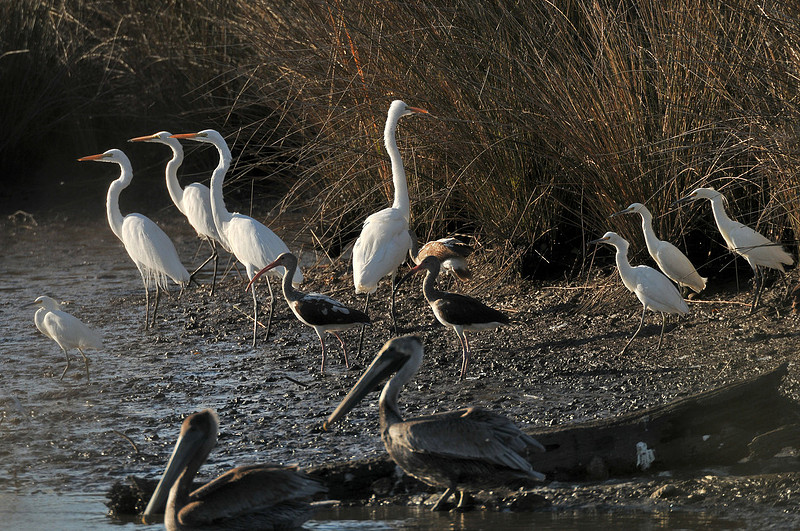
Size Comparisons Great egrets top left, ibis middle, snowy egrets right and pelicans foregroud
http://www.allaboutbirds.org/guide/great_blue_heron/id http://www.allaboutbirds.org/guide/great_egret/id http://birds.audubon.org/species/triher http://www.allaboutbirds.org/guide/reddish_egret/id http://www.allaboutbirds.org/guide/little_blue_heron/id http://www.allaboutbirds.org/guide/snowy_egret/id http://www.allaboutbirds.org/guide/white_ibis/id http://www.allaboutbirds.org/guide/cattle_egret/id http://www.allaboutbirds.org/guide/yellow-crowned_night-heron/id http://www.allaboutbirds.org/guide/black-crowned_night-heron/id http://www.allaboutbirds.org/guide/green_heron/id http://www.allaboutbirds.org/guide/american_bittern/id
Keywords:
alabama gulf coast wildlife photographer,
great blue heron,
great egret,
gulf coast herons,
gulf coast wildlife photographer,
gulf shores wildlife photographer,
mississippi wildlife photographer,
snowy egret
Comments
D. P.(non-registered)
Green herons do wade in water. I have photos of Green Herons doing just that while fishing. I’ve seen them do it for years.
Kate Hughes(non-registered)
We live in nokomis Florida. We have been seeing a smaller sized dark colored bird that looks most like an egret It’s terribly skitterishsi it’s haed to get a picture. Always around the pond out back. Always with other birds.
Anthony(non-registered)
Visiting Florida from the UK and really enjoying the bird life which lightens up our time on the golf courses:
You have captured the form and spirit of these birds in memorable style,. many thanks Anthony and Pennie,Chelmsford ,Essex
JoAnne(non-registered)
Enjoyed this beautiful display. Compelled to visit when an article LA Times spoke of" ibises and egrets" at this time visiting furrows of water near grapevines purposely flooding to replenish groundwater.
heidi(non-registered)
My Family And I Were Fishing The Gulf Coast By Pass Christian Last Night And I Took A Picture Of What I First Thought Was A Crane Then When I Woke Up This Mornin Thought About ThE Great Blue Heron Since I Was Always Told Growing Ul There Was Only A Couple Differences And When I Look At Pictures Of Them And The Picture Of The Bird I Saw And Remember Seeing Last Night I Am Almost Certain It Was A Blue Heron.
No comments posted.
Loading...
|